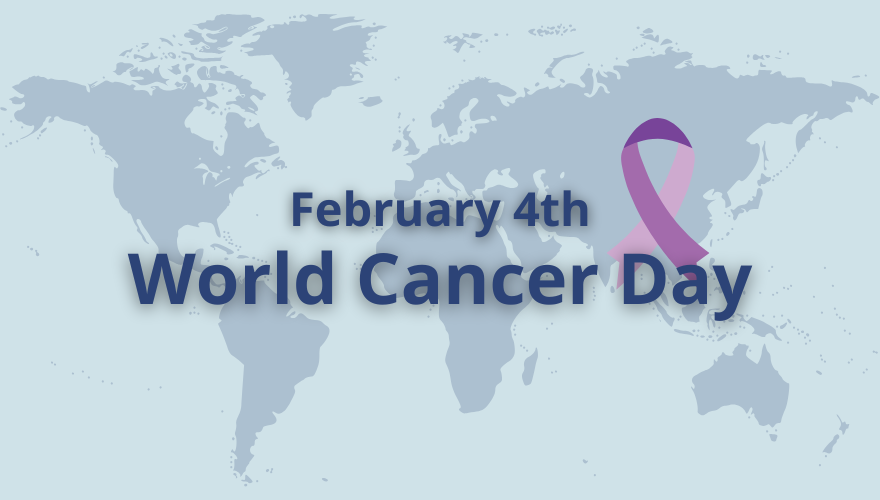
World Cancer Day
Published on 4 February 2026
Radiology and cancer: the key role of the radiology report in diagnosis
February 4 marks World Cancer Day, an essential opportunity to raise awareness and visibility for all those affected by cancer, as well as for the healthcare professionals involved in their care. In this context, it is important to highlight one of the key factors in improving prognosis: early detection.
At the heart of this detection, medical imaging plays a central role throughout the oncology care pathway, from screening to therapeutic follow-up.
The role of medical imaging
Following the onset of symptoms or as part of a screening programme, an imaging examination is often performed to identify, characterise or monitor a suspicious lesion.
Au cours des dernières années, plusieurs scores et classifications radiologiques ont été développés pour aider à la détection et à la catégorisation des lésions tumorales selon l’organe concerné, tels que BI-RADS pour le sein ou PI-RADS pour la prostate.
The interpretation of medical imaging is therefore central to oncological diagnosis, as well as to disease monitoring, treatment response assessment, and longitudinal comparison of successive examinations. This interpretation relies largely on the quality of the radiology report.
Oncology patient follow-up: a collective effort
Many healthcare professionals are involved in the management of a patient with cancer: radiologists, oncologists, surgeons, nuclear medicine physicians, pathologists, and primary care physicians. Reliable, comprehensive, and structured transmission of information among these stakeholders is essential.
As a result, the radiology report is a key component of this communication. Its quality has a direct impact on clinical decision-making, care coordination, and continuity of follow-up. Data completeness, clarity of conclusions, and consistency of information are therefore major challenges in oncology.
Structured reporting: a lever for quality and research
In a context of increasing time pressure, maintaining a high level of report quality remains a daily challenge for radiologists. Tools that support the structuring and completion of radiology reports enable:
- Time savings for the radiologist;
- Improved completeness of relevant clinical information;
- Standardization that facilitates reading and interpretation by other clinicians.
Beyond individual patient follow-up, structuring the data from radiology reports makes them usable for research purposes and practice improvement. A structured report thus benefits not only the diagnosed patient but also the future development of new classifications, imaging techniques, and therapeutic strategies.
It is essential to emphasize that these digital tools are designed to support radiologists in their practice and are not intended to replace their clinical expertise.
Keydiag: supporting radiologists in structured reporting
With this objective in mind, Keydiag was designed to support radiologists in structuring their reports. The solution organizes information in a clear and consistent manner while integrating calculators and decision-support tools. These features facilitate follow-up, data consistency, and the accuracy of the information communicated.
By supporting the quality of radiology reporting, Keydiag is part of an approach aimed at improving the transmission of medical information, in the service of the care pathway and oncological management. Improving the structure of radiology reports means acting at a discreet yet decisive level of the care journey.
Together, let’s continue making progress in prevention and medical innovation.
References
Cousin F., Valkenborgh C., Hustinx R. Concepts d’imagerie médicale dans la mise au point et le suivi des cancers : regard sur l’imagerie oncologique. Revue Médicale de Liège, vol. 76, no. 5–6, 2021, pp. 344–351. 344-351. Available online: https://orbi.uliege.be/bitstream/2268/305880/1/F-Cousin_2021_76_5-6_0.pdf
World Cancer Day. Prévenir le cancer. Journée mondiale contre le cancer.
Available online: https://www.worldcancerday.org/fr/a-propos/prevenir-le-cancer (consulté en février 2026)